
ZIP 75060 · Irving's most owner-occupied area
Water Damage Restoration in South Irving, TX 75060
75060 is where Irving owns its homes — roughly 65% owner-occupied, the highest in the city, and overwhelmingly detached single-family on slab. That changes who makes the decision, who pays, and what is at stake.
- Predominantly detached single-family on slab
- 65% owner-occupied — the decision is yours
- Your own policy, your own claim
Referral service — calls are connected to independent restoration providers. Availability, pricing and licensing are the provider's responsibility.
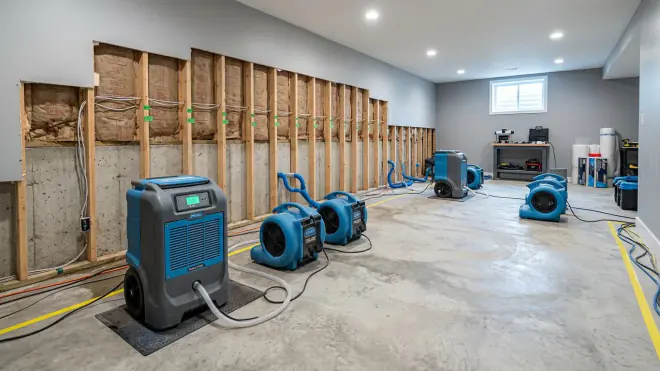
The 75060 profile
ZIP 75060 covers 12.1 square miles of south Irving with 47,955 residents in 15,595 housing units. Its defining statistic is tenure: 64.9% owner-occupied, against a citywide figure of roughly 38% — making it by a clear margin the most owner-heavy part of Irving. Median household income is $71,575.
That shows in the housing. Where Las Colinas builds upward and 75062 mixes everything together, 75060 is predominantly detached single-family housing on slab foundations, on established streets of the sort the Chamber describes around neighbourhoods like Northgate Heights — affordable homes on tree-lined streets.
The practical difference this makes to a water loss is about decision-making rather than physics. In a rental or a managed building, a leak triggers a process involving landlords, management companies and sometimes several insurers. Here, you discover it, you decide what to do, you choose the provider and you file the claim on your own policy. That is faster — and it also means nobody else is checking the paperwork for you.
Slab leaks are the characteristic 75060 problem
Detached single-family housing on slab, built largely during and around Irving's 1980s boom, sitting on Blackland Prairie clay. That combination produces slab leaks, and they are the hardest water loss to catch early.
The mechanism is soil behaviour. Dallas County's expansive clay swells when it takes up water and shrinks when it dries out, and the resulting ground movement flexes the slab. Supply lines running within and beneath the slab are stressed by that movement until a joint or a section fails. The leak then releases into the ground or across the top of the slab, where there is often nothing to see for weeks or months.
Because there is no visible water, you have to watch for second-order signs:
- A water bill that jumped without a change in usage. The most reliable early indicator.
- A warm patch on the floor — a hot water line, and a strong signal.
- Running water audible with every fixture and appliance off.
- Flooring that lifts, cups or separates at a seam, or carpet that is damp at one edge with no source above it.
- A musty smell in one room with no visible cause.
- New or widening cracks in drywall or around door frames, which can indicate the soil moisture change driving the slab.
The two-minute check: shut off everything that uses water and watch the meter's leak indicator. If it moves, something is running. Do that quarterly and you will catch most slab leaks far earlier than the alternative. See burst pipe water damage for what happens next.
Being the decision-maker: what to get right
Because you are the one choosing, these are the things worth being deliberate about.
- Know where your shut-off is before you need it. On a 75060 slab home it is normally at the meter box near the street or an exterior wall valve. Check it turns — a valve that has not moved in twenty years often will not.
- Photograph before anything is touched. Wide shots room by room, then close-ups of the source and the damage. Your claim is built on this and it cannot be recreated.
- Get the scope in writing before work starts — what comes out, what gets dried, how many days of equipment are anticipated, and what is excluded.
- Ask whether the quote is mitigation only or mitigation plus rebuild. This single question explains most of the gap between two quotes that look far apart.
- Read anything you sign. Some agreements include a direction-to-pay or assignment of benefits that transfers your claim rights to the contractor. That can be fine — but know you are doing it.
- Ask for daily moisture readings and drying logs. They are what your adjuster works from, and a provider who takes them properly will hand them over without hesitation.
On insurance: Texas policies generally cover sudden and accidental water damage and exclude gradual damage from a long-running leak. A slab leak that ran for months sits uncomfortably close to that line, which is exactly why early detection and prompt reporting matter so much here.
Seasonal pattern in 75060
Winter is the one to plan for in a detached slab home. Pipes run through unconditioned attics and garages, hose bibs are often uncovered, and a multi-day hard freeze finds all of it at once. February 2021 remains the reference: over 500,000 winter-storm insurance claims across Texas, 85% residential, with roughly $5.8 billion paid out, concentrated in the Houston and Dallas–Fort Worth areas and mostly for frozen and burst pipes. Insulating attic and garage runs and covering hose bibs is an afternoon's work and costs very little.
Spring brings hail and the heaviest rain — hail reports peak March through June and May averages near five inches. The common sequence is hail damage to a roof in spring and water entry during a later storm. Detached homes also carry gutter and drainage responsibility that apartment residents do not: a blocked gutter or a downspout discharging at the foundation puts water straight into the soil against the slab, which feeds the same clay movement that causes slab leaks.
Summer is HVAC condensate season, and the hottest months are when slab leaks most often reveal themselves — the clay is at its driest, soil movement is at its greatest, and lines under stress give way.
Autumn is the sensible time for the preventative work: clear the gutters, check the grading drains away from the house, service the water heater, and exercise the shut-off valves before winter arrives.
Available here
Restoration services across South Irving
All services are available across 75060. Slab leaks, water heater failures and freeze bursts are the most common calls from this part of the city.
- Emergency Water ExtractionStanding water pumped out first
- Structural Drying & DehumidificationDrying what the pump can't reach
- Burst Pipe Water DamageSupply lines, freezes and slab leaks
- Ceiling Water Damage RepairStains, sagging and upstairs leaks
- Storm & Flood Damage CleanupCreek rise, roof and wind-driven rain
- Sewage Backup CleanupCategory 3 water, handled safely
- Fire & Smoke Damage RestorationSoot, char and odour
- Mold Removal & RemediationTexas-licensed remediation rules
- Biohazard CleanupTrauma, hoarding and contamination
ZIP codes covered on this page
- 75060
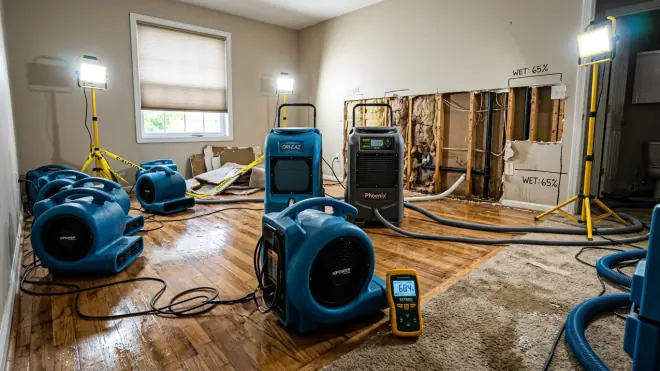
Nearby areas we also cover
- East IrvingZIP 75061, directly north-east
- North IrvingZIP 75062, to the north
- Las ColinasZIP 75039 & 75038, to the north
As the decision-maker you will get more from the background than most. Water damage restoration throughout Irving sets out the cost factors and the provider checks in full. See the full Irving coverage list, including every campaign ZIP code.
Water damage in your 75060 home?
As the owner you make the call. We will connect you so you can ask the questions before authorising anything.
Local FAQ
South Irving water damage questions
How do I check for a slab leak myself?
Turn off every fixture and appliance that uses water, then watch the water meter's leak indicator or low-flow dial for a few minutes. If it moves, water is going somewhere. Combine that with the other signs — a warm patch on the floor, running water audible with everything off, an unexplained bill increase, flooring lifting or cupping. Doing the meter check quarterly catches most slab leaks far earlier than waiting for visible damage.
Why do slab leaks happen so often in this part of Irving?
Soil. Dallas County sits on Blackland Prairie clay, which swells when wet and shrinks when dry. That movement flexes the slab foundations that nearly all 75060 homes are built on, and the water lines running through and beneath the slab are stressed until something gives. It is a property of the ground rather than of the plumbing, which is why it recurs across the area.
Will insurance cover a slab leak?
It depends on how long it ran. Texas policies generally cover sudden and accidental water damage and exclude gradual damage from a long-running leak — and slab leaks, by their nature, often run undetected for a while. Many policies also cover the resulting damage while excluding the cost of accessing and repairing the pipe itself. Early detection and prompt reporting materially improve your position, which is the practical argument for the quarterly meter check.
What is the single best thing I can do to prevent water damage here?
Two things, both cheap. Before winter, insulate pipe runs in the attic and garage and cover the hose bibs — freeze bursts are the highest-consequence event in a detached slab home. Year-round, make sure water drains away from the foundation: clear gutters, extend downspouts, and check that the grading slopes away. Keeping soil moisture even around the slab reduces the movement that causes both foundation problems and slab leaks.
Should I use the contractor my insurance company recommends?
You are generally entitled to choose your own, and it is worth knowing that. A carrier's preferred vendor may be perfectly good and the billing is often simpler. But they have an ongoing commercial relationship with the insurer, and you may prefer someone whose only relationship is with you. Either way, apply the same checks: written scope before work starts, proof of insurance, daily moisture readings, and clarity on whether the quote covers mitigation only or mitigation plus rebuild.
Still not sure what you are dealing with? Describe it on the phone and we will point you the right way — (469) 960-7264.
Talk to someone now
Water damage in South Irving?
Tell us what failed and where you are in 75060. We will connect you with an independent restoration provider covering this part of the city.
(469) 960-7264Referral service — calls are connected to independent restoration providers. Availability, pricing and licensing are the provider's responsibility.